
 By Prime Star
Downtime can be a significant drain on a company’s resources, resulting in lost revenue, operational setbacks, and erosion of customer trust. Businesses that invest in strategies for minimizing downtime create a more resilient infrastructure and achieve a competitive advantage. Whether you’re in manufacturing, IT, retail, or healthcare, proactive planning and the adoption of innovative technology can make all the difference. For organizations serious about uptime, partnering with specialized providers like C&B Equipment offers tailored solutions that target reliability and operational efficiency.
Maintaining smooth business operations is more than just reacting to issues—it’s about building systems and teams that are prepared, well-maintained, and secure. From deploying redundancy in critical systems to ongoing employee training, comprehensive downtime mitigation is foundational to long-term success.
Conduct Regular Risk Assessments
Regular risk assessments deliver a comprehensive analysis of your current IT and operational infrastructure. These assessments help identify obsolete software, hardware, or pieces of equipment that pose hidden or looming threats. Outdated or unsupported systems are more prone to failures and security vulnerabilities, making them frequent culprits behind both minor and major interruptions. By scheduling frequent risk assessments, businesses can prioritize necessary upgrades, boost reliability, and create a detailed roadmap for maintaining critical assets.
Implement Proactive Maintenance Plans
Proactive maintenance is one of the most effective ways to minimize downtime and extend asset lifecycles. Scheduled inspections, routine updates, and preventive repairs can identify issues early, often before they become larger operational disruptions. Studies show that proactive maintenance can reduce overall repair costs by 12%-18% compared to reactive strategies. Incorporating predictive maintenance tools that use IoT sensors and analytics can further reduce unexpected breakdowns and streamline workflow continuity.
Utilize Real-Time Monitoring Systems
Real-time monitoring allows organizations to maintain constant visibility into the health and performance of critical systems, networks, and applications. Through live dashboards, automated alerts, and data analytics, teams can detect anomalies the moment they occur and act before minor issues escalate into major disruptions. This rapid response significantly reduces downtime, service interruptions, and associated costs. While implementing real-time monitoring requires upfront investment in specialized tools and infrastructure, the long-term benefits are substantial. Faster issue resolution, improved accountability, clearer operational insights, and more reliable service delivery ultimately strengthen productivity, resilience, and overall business performance across modern digital environments and industries worldwide.
Establish Redundancy and Failover Systems
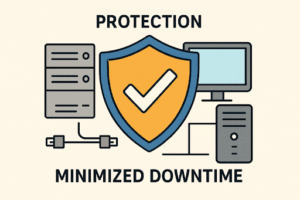
Redundancy serves as a vital insurance policy for mission-critical business operations, safeguarding continuity in the event of unexpected failures. By duplicating essential components such as servers, storage, power supplies, and network connections, organizations reduce single points of failure that could otherwise halt operations. Modern redundancy strategies often include integrated failover systems that instantly detect issues and shift workloads to backup resources without requiring manual intervention. This seamless transition keeps downtime to a minimum and largely goes unnoticed by customers or employees. Such resilience is especially crucial in industries such as finance, healthcare, and e-commerce, where even brief service interruptions can result in significant financial losses, reputational damage, and a decline in customer trust.
Invest in Employee Training
The human element is a crucial factor in preventing downtime. Unintentional mistakes—such as configuration errors or mishandling sensitive systems—are among the top causes of outages. Regular and thorough employee training programs significantly reduce this risk, especially when training incorporates real-world simulations and crisis management drills. Employees who are well-versed in company protocols and emergency responses are better equipped to minimize the impact of disruptions and quickly restore services.
Enhance Cybersecurity Measures
As cyberattacks become more prevalent, businesses must fortify their defenses to protect not only their data but also their operational continuity. Attacks such as ransomware or advanced persistent threats can bring operations to a halt. Investing in modern cybersecurity measures—including firewalls, endpoint protection, multi-factor authentication, and regular security audits—significantly reduces the chances of unexpected stoppages. A robust security strategy should also include employee awareness training to defend against phishing and social engineering schemes.
Leverage Edge Computing
Edge computing processes data closer to its source, resulting in faster response times and reduced opportunities for failures caused by network delays or central server issues. Sectors such as healthcare, logistics, and manufacturing benefit immensely from edge solutions, as localized computing reduces dependency on distant data centers and enables real-time decision-making. Adopting edge computing architecture boosts resilience in time-sensitive environments and gives businesses more control over critical processes.
Develop a Business Continuity Plan
Every business needs a comprehensive Business Continuity Plan (BCP) that clearly outlines step-by-step protocols for various scenarios of downtime and disruption. A strong BCP includes communication guidelines, escalation paths, and strategies for maintaining essential functions until systems are fully restored. Practicing and revising this plan regularly ensures staff readiness and helps safeguard revenue and reputation in the event of an incident. For further guidance on building a high-impact continuity plan, the experts at Ready.gov offer valuable resources for businesses of all sizes.
By integrating these strategies—regular assessments, proactive maintenance, real-time monitoring, redundancy, workforce readiness, cybersecurity, edge computing, and robust continuity planning—organizations can minimize unplanned downtime while maximizing uptime, productivity, and customer satisfaction.