
 By Allen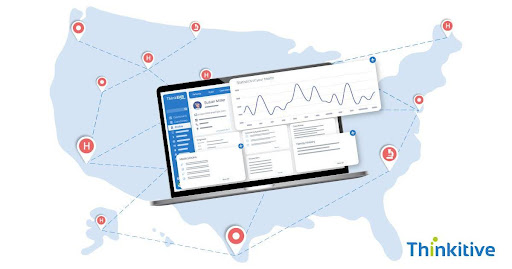
After opening a healthcare practice, the most logical step with respect to growth is making it bigger or opening another practice at a different location, right?
You see, every healthcare practice is trying to build a healthcare network to provide the best possible care. And this is exactly what healthcare practices are aiming for. By turning their single clinic into a multi-location practice, they are aiming to expand their network to give access to everyone.
Physically setting up the practice is not something that is troubling these healthcare practices. In fact, it is the practice management system that is keeping them worried.
Most of the practices opening a single clinic usually implement generic EHR systems, which usually work perfectly for a single clinic with not much unique needs or intricacies. However, the moment these practices decide to open a different practice at a different location, their generic EHR system starts becoming a problem, as these systems are simply unable to align with your growth plans and workflows.
And this has been one of the major demands of healthcare practices that are looking for EHR system development. They want a multi-location EHR that focuses on connectivity, scalability, and performance, and naturally, they think a custom EHR software is the best solution for them.
Truth to be told, they are not wrong. With a custom EHR software, they can enable their multi-location practice as a single connected system, without the fear of losing efficiency or control.
On that note, let’s see why custom EHR system development is the best option for multi-location EHR and how it can help your practice with its growth aspects.
Core Challenges Faced by Multi-Location Practices
Before getting into the intricacies of a multi-location EHR, let’s first discuss some of the core challenges that you’re likely to encounter in this regard.
- Fragmented Patient Data: The first challenge comes in the form of data. You see, having two different systems operating at two different practices creates conflict in data management. On top of that, the chances of record duplication and incomplete recording of the clinical history of the patients are high.
- Inconsistent Workflow: Suppose your multi-location practice offers different specialty services. Now, they are bound to have different workflows for different processes, both clinical and administrative. However, if your software has the same workflow, then it creates conflict with the processes and impacts care quality, as well as increases administrative burden.
- Administrative Overload: Mismatch of workflows, especially on the administrative side, can simply increase the workload. This first one, being excessive documentation, the chances of your physicians burning out increase immensely.
- Limited Visibility: When you have two systems operating at two different locations, you get limited visibility for your data. This causes difficulty in managing operations effectively, and performance across sites can be impacted immensely.
Key Features of a Future-Ready Multi-Clinic EHR
Now that you are aware of some of the major challenges that you’re likely to encounter while setting up your multi-location practice, let’s see how a custom EHR software helps you overcome these challenges. Here are some of the key features that a multi-location EHR must have, and this is what you should aim for as well:
- Centralized Patient Records: When building a custom EHR software as a multi-location EHR, you should aim for creating a centralized system for patient record keeping. This way, patient profiles can be accessed across all the locations easily, eliminating the risk of duplicate records or incomplete clinical history.
- Interoperable Architecture: The next feature that you must have is building an interoperable healthcare software for clinics. This is because it gives your system the ability to connect and communicate with other disparate healthcare software systems. Meaning you can seamlessly exchange data with labs, pharmacies, and other external providers.
- Specialty-Specific Workflows: As discussed earlier, different specialties have different workflows. Now, with a custom EHR software, you get that flexibility in templates. You see, you can create different templates for different care types within the same system. Won’t this make most of your processes simpler, sophisticated, and streamlined?
- Automation Support: In the age of AI, automation is going to do most of the things for us. This can be brought into your EHR system as well. The applications of this documentation and other aspects reduce manual tasks and improve the day-to-day efficiency of providers.
Strategic Benefits of Custom EHR System Development
Custom EHR system development gives you a strategic advantage in the long run. Here are some of the strategic benefits you get with a custom EHR software for your multi-location practices:
- Scalable Growth: The first advantage you get with EHR system development is in growth. You see, instead of getting a new system altogether, you can simply add new clinics without having to make many changes in the software system.
- Standardized Operations: Rather than following multiple protocols for your software systems set at different locations, with custom EHR software, you can have standardized care protocols across systems. This way, you can ensure that care delivery is consistent across your practices and ensure that the best possible care is being provided to the patients.
- Improved Care Coordination: The secret to care coordination in today’s healthcare landscape is access to real-time data. You see, when teams can get the data they need at the right time, the care journey can be enhanced, and it can be coordinated exceptionally. It will allow you to bring your entire care team together on the same page and work towards the same goal. Some of the outcomes of this can be better preventive care and personalized care.
- Operational Efficiency: Coming to the major advantage that your multi-location practice gets with custom EHR is operational efficiency. With connected systems, you can schedule appointments better, file claims more efficiently, and reporting can be enhanced across the network at all times.
Security & Compliance Across Location
All the advantages and benefits you get with a custom EHR software for your multi-location practice will mean nothing if your security is weak. Being one of the core components of a custom EHR software, the security and compliance of your EHR system must not be ignored.
And the first step you need to do is have a HIPAA-compliant EHR. Some of the core components of HIPAA compliance are data accessibility and data sharing. Since you’ll be dealing with some of the most private information of your patients, having a HIPAA-compliant EHR will ensure that your data is being shared in a secure environment.
Another core aspect that must be in your EHR is role-based permission for clinic and staff types. You see, the EHR system will be used by many people with different roles. And let’s be honest, nobody needs to access all the data of the patient. This is where this role-based access control comes into the picture. This way, you can ensure that only authorized personnel can access certain parts of data, maintaining integrity and confidentiality.
During the development process, if possible, try to set up your software in a secure cloud-based infrastructure. Other than instant access, which allows you get data at any given moment, it can also support your system across locations for uptime. Furthermore, in case of any disaster, the disaster recovery mechanism kicks in, saving your valuable data.
One of the best practices that you can adopt for security is to have compliance built into your system. Meaning it should be managed separately at each site, instead of being ingrained into the system, you enhance security and ensure that your software is compliant with necessary compliance.
Conclusion: One System, Many Locations
Multi-location practices need more than what a basic EHR has to offer. It needs workflows that align with the practice and all the other aspects that come with it. Here, having different systems at different locations for your practice will simply create a mess of workflows, care delivery process, in short, everything.
This is the reason why custom EHR systems are in trend and are used by many practices as a unified foundation for growth, compliance, and care quality. On that note, let this blog be your guide to multi-location EHR development. And if you don’t know when to get started, then click here to get your first free consultation.
FAQs
- Can a custom EHR support multiple clinic locations under one system?
Yes. A custom EHR system can be purpose-built to support multiple clinics and locations within a single, unified platform. It allows centralized administration while enabling location-specific workflows, provider roles, billing rules, and reporting. This ensures operational consistency across sites without forcing every clinic to work the same way.
- How does custom EHR software keep patient data consistent across sites?
Custom EHR software maintains data consistency through a centralized database architecture, real-time synchronization, and standardized data models. Patient records are updated instantly across all authorized locations, reducing duplication, preventing data silos, and ensuring clinicians always access the most accurate and up-to-date information—regardless of where care is delivered.
- Is multi-location EHR software compliant with HIPAA regulations?
Yes, when designed correctly. A HIPAA-compliant EHR includes role-based access controls, audit logs, data encryption (at rest and in transit), secure authentication, and strict access policies across all locations. Custom EHR development ensures compliance is embedded into the system architecture rather than added as an afterthought.
- How scalable is custom EHR software for growing practices?
Custom EHR software is highly scalable by design. It can support new clinics, providers, users, and service lines without performance degradation. Whether you’re expanding regionally or adding specialty locations, a scalable multi-location EHR grows with your practice—without requiring system replacement or costly reimplementation.
Winston Human Score:
Semrush SEO Score: